
When evaluating rock wool micro cubes vs sphagnum moss,both can support high-value propagation, but they create different root-zone conditions and require different production strategies. Moss provides familiar moisture contact and handling characteristics. Micro cubes provide a loose, inorganic structure designed to support drainage, root-zone aeration and repeatable filling. The better choice depends on the crop, container, irrigation system, labour model and production cycle.
Why This Comparison Matters
Long-fibre sphagnum moss has an established role in orchid acclimatization, tissue-culture deflasking and specialty plant production. Its capillary behaviour and close contact around young roots can be valuable, particularly in systems built around manual watering and skilled hand packing.
As nurseries scale, however, they may also need to manage variation in natural materials, labour-intensive filling, physical change during the crop cycle and substrate-related shipping requirements. Rock wool micro cubes, including GF-MC10, offer an inorganic alternative that can be evaluated when root-zone openness and operational repeatability are priorities. This comparison does not assume that either medium is universally superior.
Core Qualitative Comparison
| Attribute | Sphagnum moss | Rock wool micro cubes |
|---|---|---|
| Material origin | Natural organic bryophyte | Horticultural stone wool made from selected mineral raw materials |
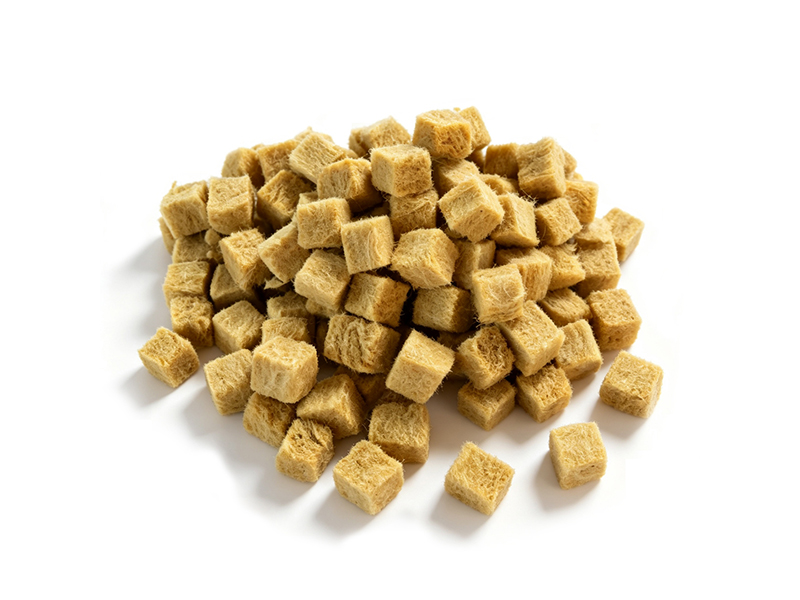
| Container structure | Interwoven fibres shaped by preparation and hand packing | Regular loose cubes with pore structure within each cube and spaces between cubes |
| Water-air behaviour | Strongly influenced by moss grade, rehydration and packing pressure | Strongly influenced by cube geometry, container, filling density, irrigation and drainage |
| Filling process | Usually requires rehydration, preparation and manual placement around roots | Requires thorough pre-wetting, then loose filling and gentle settling |
| Change over time | Can soften, settle and decompose during extended use | Does not biologically decompose like organic media, although cubes may settle during handling and root growth |
| Nutrient interaction | Organic material can influence solution chemistry and nutrient availability | Contributes little nutrition and has relatively low buffering capacity |
| International shipping | May receive additional substrate-related scrutiny on some routes | Inorganic character may simplify some assessments but does not guarantee clearance |
Structural Stability Through the Crop Cycle
Sphagnum moss is an organic material. Its fibre quality, length and cleanliness can vary by source and grade, and its physical structure can gradually change as fibres soften, settle and decompose. The rate of change depends on irrigation, temperature, handling and crop duration. When moss is packed firmly, small differences in hand pressure can also create different root-zone densities from pot to pot.
Stone wool micro cubes do not biologically decompose in the same way. Their basic geometric form can therefore remain recognizable through a propagation cycle. This does not mean the container structure is fixed: root growth, irrigation, transport and handling can still change how the cubes settle. The relevant advantage is resistance to organic decomposition, not a guarantee of identical pore geometry over time.
Moisture Retention and Root-zone Aeration
How Sphagnum Moss Behaves
Sphagnum moss can provide strong capillary contact around young roots and hold substantial moisture when properly prepared. Its behaviour depends heavily on fibre quality and packing. Loosely prepared moss and tightly compressed moss can perform very differently in the same container. When the material remains persistently wet or becomes compacted, air movement around sensitive roots may be reduced.
How Rock wool Micro Cubes Behave
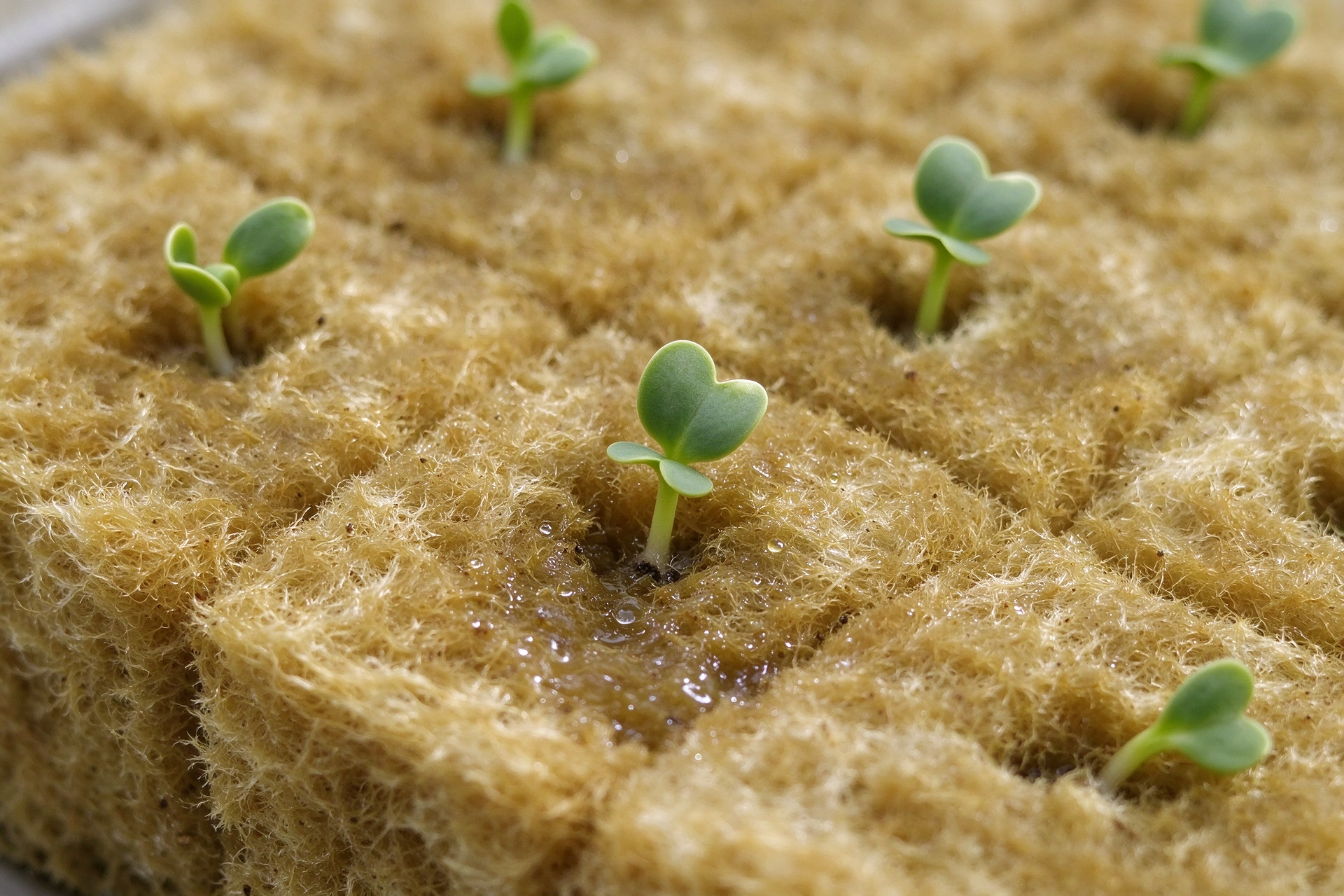
Rock wool micro cubes create two related pore environments. The porous fibre structure within each cube supports moisture distribution, while the spaces between cubes contribute to drainage and air-filled porosity under free-drainage conditions. Actual performance still depends on the container, filling density and irrigation programme.
A grower should not transfer a moss irrigation schedule directly to micro cubes. Nor should the direction of adjustment be assumed in advance. Irrigation frequency, application volume and drainage targets should be recalibrated through a controlled trial using the intended crop and container.
Container Filling and Labour
Moss commonly requires rehydration, fibre preparation and deliberate placement around the root system. Experienced workers can achieve excellent results, but packing density may vary among operators and production batches. In large propagation programmes, this skill requirement can become a labour and consistency consideration.
The regular, free-flowing form of micro cubes may support faster and more repeatable filling because the material can be poured around the roots and settled gently. That potential should be measured rather than assumed. A useful commercial trial records filling time, medium used per container, weight variation, rework and plant damage under the nursery's actual workflow.
Nutrition and Root-zone Monitoring
Sphagnum moss is generally acidic, but initial pH and buffering behaviour vary with source, grade, processing and source-water quality. As an organic medium, it can interact with the applied solution and influence nutrient availability over time.
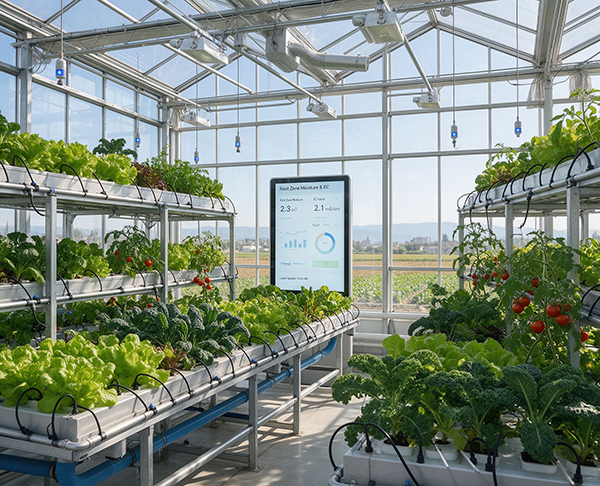
Rock wool contributes little nutrition of its own and has relatively low buffering capacity. This gives growers direct control over nutrient inputs, but not automatic control of root-zone conditions. Plant uptake, evaporation, irrigation uniformity and drainage can cause root-zone pH and EC to differ from the applied solution. A crop-appropriate fertilizer programme and routine monitoring are therefore necessary during evaluation.
International Plant Shipping
Organic growing media may receive additional scrutiny in some international plant-shipping routes. Stone wool is inorganic and produced through a high-temperature manufacturing process, which may simplify certain substrate-related phytosanitary assessments compared with some organic materials. It does not create automatic compliance or guarantee customs clearance. Exporters must confirm current requirements for the crop, origin, destination, plant condition and shipment.
Which Medium May Fit Your Production System
| Production factor | Sphagnum moss may fit when | Micro cubes may fit when |
|---|---|---|
| Early moisture contact | Close, continuous fibre contact around small roots is central to the existing method | An open loose-fill structure can be integrated without compromising initial moisture management |
| Irrigation capability | The current moss schedule is stable and closely supervised | The team can monitor drainage and recalibrate irrigation during transition |
| Potting workflow | Skilled manual packing is available and consistent | Repeatable loose filling may reduce operator-dependent variation |
| Crop duration | The medium remains structurally suitable for the planned cycle | Resistance to organic decomposition is operationally important |
| Quality control | Natural variation is already managed through supplier and batch controls | Standardized geometry and filling procedure are priorities |
| Export programme | The existing crop and moss route already meets destination requirements | An inorganic medium is worth evaluating for substrate-related assessment |
These are evaluation criteria, not universal rules. Crop, container, climate, irrigation and labour should be assessed as one production system.
How to Run a Side-by-side Commercial Trial
A substrate transition should be tested under real greenhouse conditions before scale-up. Use the same crop batch, container type and environmental zone, then document any irrigation adjustments made for each medium. The objective is not to force identical management, but to compare two properly managed production systems.
- Record transplant establishment and survival at agreed observation dates.
- Assess root initiation, root colour, root distribution and attachment to the medium.
- Track irrigation input, drainage behaviour and visible moisture uniformity.
- Measure filling time, material use, rework and operator-to-operator variation.
- Compare plant uniformity, losses and handling requirements before deciding whether to scale.
A hybrid or blended treatment may also be included when it reflects the nursery's intended use, but its composition and irrigation strategy should be evaluated separately rather than assumed to behave like either material alone.
Frequently Asked Questions
Can I switch directly from sphagnum moss to rock wool micro cubes without changing irrigation?
No. The media differ in structure, wetting and drainage behaviour. Irrigation frequency, application volume and humidity management should be recalibrated during a side-by-side trial.
Do micro cubes require a special fertilizer?
They require a complete fertilizer programme suited to the crop, growth stage and source-water chemistry. Because stone wool has relatively low buffering capacity, applied and drainage solution should be monitored during the trial.
Can rock wool micro cubes be blended with other media?
They can be evaluated as a structural component in a blend. Particle size, mixing ratio, container geometry and irrigation will change the water-air behaviour, so the blend should be treated as a separate growing system.
Are micro cubes always better for orchid roots?
No. Performance depends on orchid type, plant stage, container, humidity, irrigation and grower practice. Their open structure may be useful for aeration-sensitive systems, but suitability must be demonstrated in the intended crop.
Does stone wool guarantee easier export clearance?
No. Its inorganic character may simplify some substrate-related assessments, but plant health and import requirements remain specific to each destination and shipment.
The Decision Is About the Production System
Sphagnum moss and rock wool micro cubes require different production strategies. The commercial question is not which material is universally better, but which root-zone system is more repeatable under the grower's crop, container, irrigation and labour conditions.
For nurseries considering a change, a structured parallel trial provides stronger evidence than a material-only comparison.